

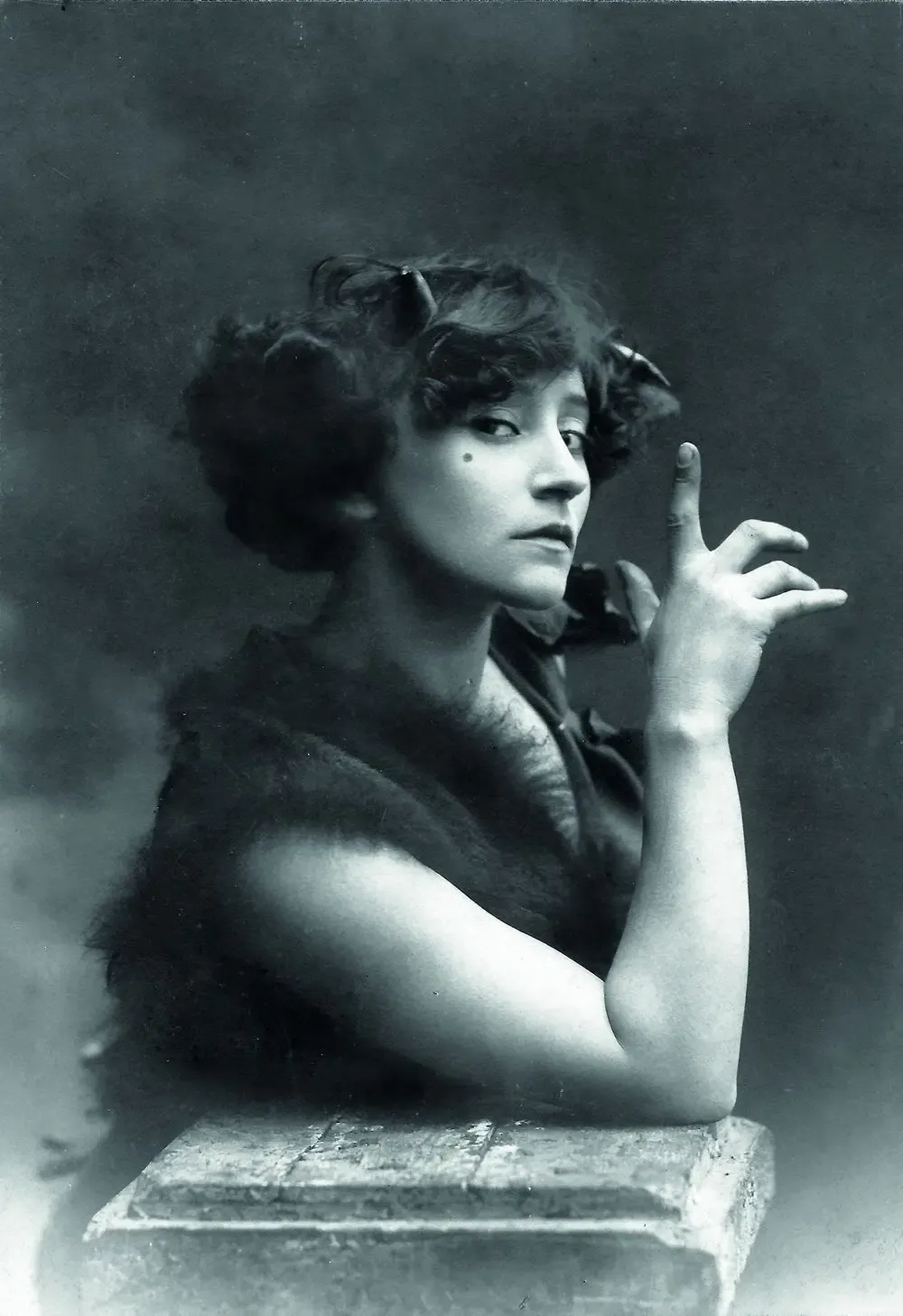

The figure of the writer has always fascinated me: a creator of genius, possessed by an almost divine inspiration. The image is so culturally entrenched that I can never quite shake it. But it obscures something essential: the work behind the work, and the relentless hours it demands. It leaves anyone who writes (or aspires to write) in a posture of waiting. Waiting for an inspiration that withholds itself, and that seems, somehow, to be reserved for others.
Without reducing writing practice to a tally of hours and words, refocusing attention on the work allows for a more fertile and more accessible posture. Because the figure of genius loads the writer's desk with ambitions that, more often than not, outsize and discourage them. The necessity of practice is humbler, but more within reach, and far less intimidating.
Where does this figure of the inspired genius come from?
Genius is a recent invention
The figure of the creative genius has not always existed. It has a history, and one more recent than we tend to think.
Sociologist Nathalie Heinich traced this transformation in L'élite artiste1. Until the 18th century, painters and writers were craftspeople. They learned their trade through apprenticeship, repetition, and gradual mastery. No one expected them to be "inspired." They were expected to work.
At the turn of the 19th century, Romanticism imposed an entirely different vision: what Heinich calls the regime of singularity. Through the growing importance given to the signature and individual originality, the artist was no longer a craftsperson among others. They became a being apart, endowed with an innate vocation. Their value no longer came from technical mastery but from their interiority, from what made them irreducibly singular.
The figure of the creative genius is a cultural construction. Not a truth about human nature. And it does not always help us understand the work of creation in general, or the practice of writing in particular.
Creation is work
Sociologist Pierre-Michel Menger exposes the tautological nature of this figure: we recognize genius by the quality of the work, which in turn flows from the artist's own genius. He chose instead to dedicate his career to observing what artists actually do when they work2. His conclusion: creating means working without knowing if it will succeed. Not because of a lack of talent, but because that is the very nature of creative work: advancing on uncertain ground.
An important clarification: this is not about denying that individual dispositions exist. Some people have a musical ear, others a facility with words. But disposition produces nothing on its own. It is a starting point, not an engine. The engine is repeated work.
Psychologist Dean Keith Simonton demonstrated this through an unexpected path. By studying the careers of classical composers and scientists, he formulated what he calls the equal-odds rule3: the ratio between the number of creative successes and the total number of works produced remains constant. In other words, each work has statistically the same chance of being the one that matters, whether you've produced ten or a hundred. The most significant creators were not those with a better success ratio: they were those who produced enough for the probabilities to work in their favor.
Simonton doesn't deny that talent exists. He shows that the volume of production is the lever we can actually pull.
Routine sets you free
If regularity is the real lever, how do the creators who last organize themselves?
Mason Currey, in Daily Rituals4, compiled the daily routines of 161 creators. What stands out is their ordinariness: brief, fixed, protected windows of work. Tolstoy noted in his journal that he had to write each day "not so much for the success of the work, as in order not to get out of his routine." Thomas Mann wrote from 9am to noon, every day, without exception.
The pattern is remarkably consistent. Creation is not a heroic performance. It is an ordinary practice, made possible by its very regularity.
Psychologist Robert Boice tested this idea experimentally5. In a series of studies with blocked academic writers, he showed that committing to short, regular sessions (especially with external accountability) produced vastly more than having no framework at all. But the most striking finding was not the quantity. The most regular groups also reported more creative ideas.
The implication runs beyond productivity: in Boice's studies, the regular framework conditions the very appearance of the ideas that the absence of framework was supposed to release.
What this changes for you
Whether you write for pleasure, to clarify your thoughts, for a professional project, or with literary ambitions, the starting point is the same. The figure of the inspired writer is not wrong: it is incomplete. It shows the result without showing what made it possible. And what we observe, in everyone who has been studied, is always the same thing: sit down, write, start again.
Regular practice is accessible to everyone. It requires neither genius, nor vision, nor even self-confidence. It only asks that you begin, and come back tomorrow.
In the next article, we'll look at what the actual routines of writers teach us about sustaining a practice over time.
Footnotes
- Heinich, N. (2005). L'élite artiste. Excellence et singularité en régime démocratique. Gallimard. ↩
- Menger, P.-M. (2009). Le travail créateur. S'accomplir dans l'incertain. Gallimard/Seuil/EHESS. ↩
- The equal-odds rule was first formulated by Simonton in the late 1980s. See: Simonton, D. K. (1988). Scientific Genius. Cambridge University Press; Simonton, D. K. (1997). "Creative productivity: A predictive and explanatory model of career trajectories and landmarks." Psychological Review, 104(1), 66-89. ↩
- Currey, M. (2013). Daily Rituals: How Artists Work. Alfred A. Knopf. ↩
- Boice, R. (1983). "Contingency management in writing and the appearance of creative ideas." Behaviour Research and Therapy, 21(5), 537-543. See also: Boice, R. (1990). Professors as Writers. New Forums Press. ↩